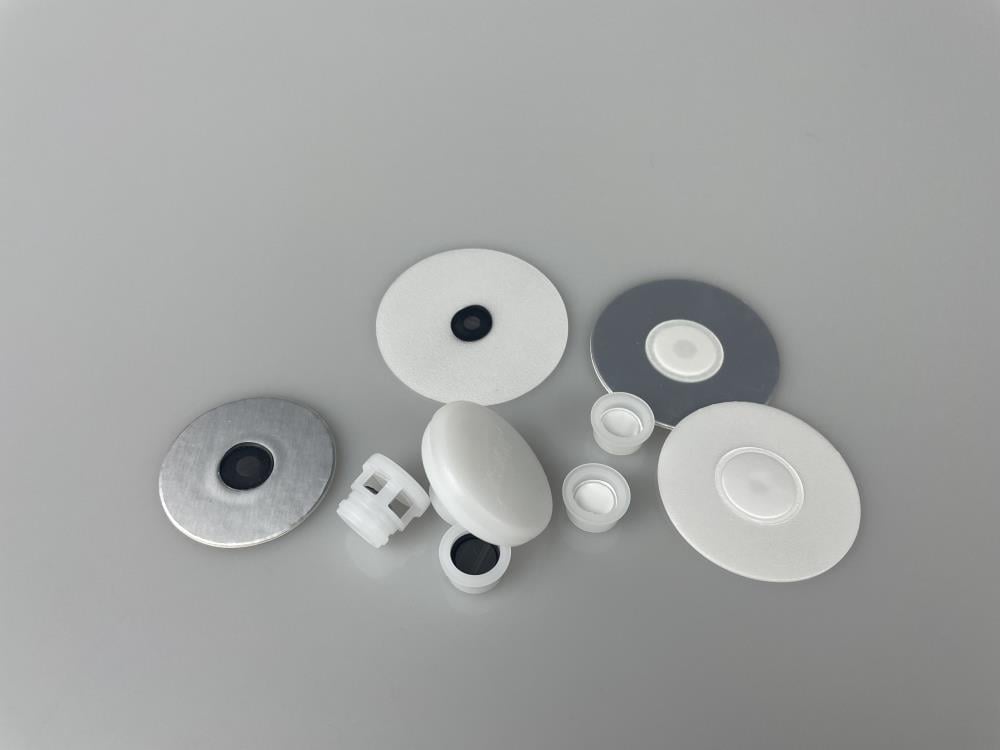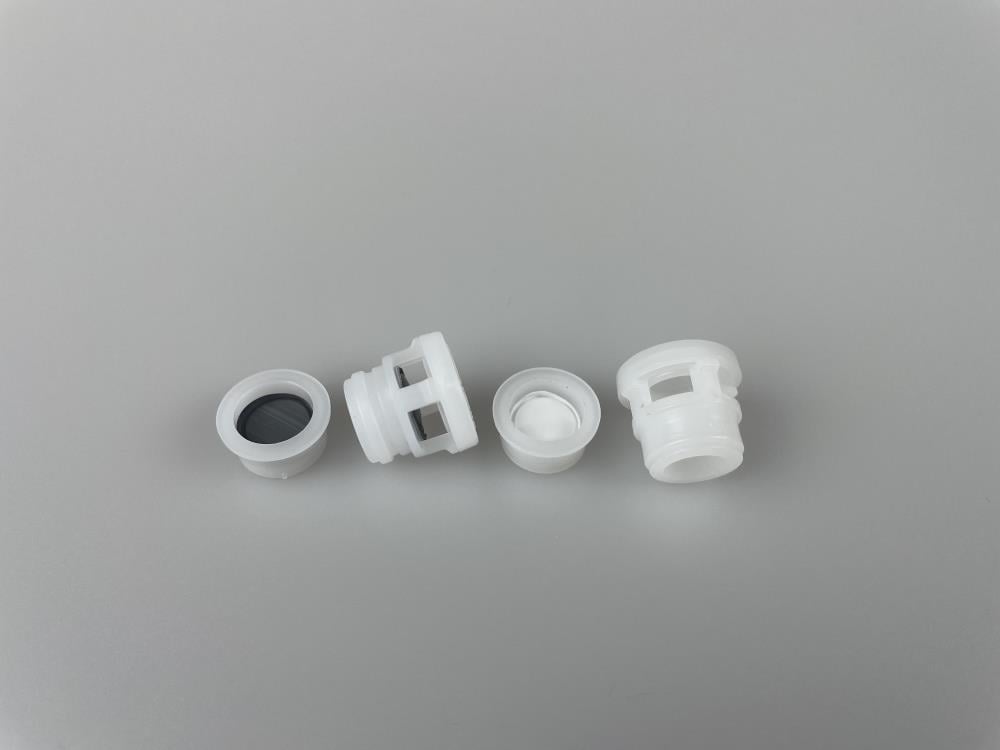
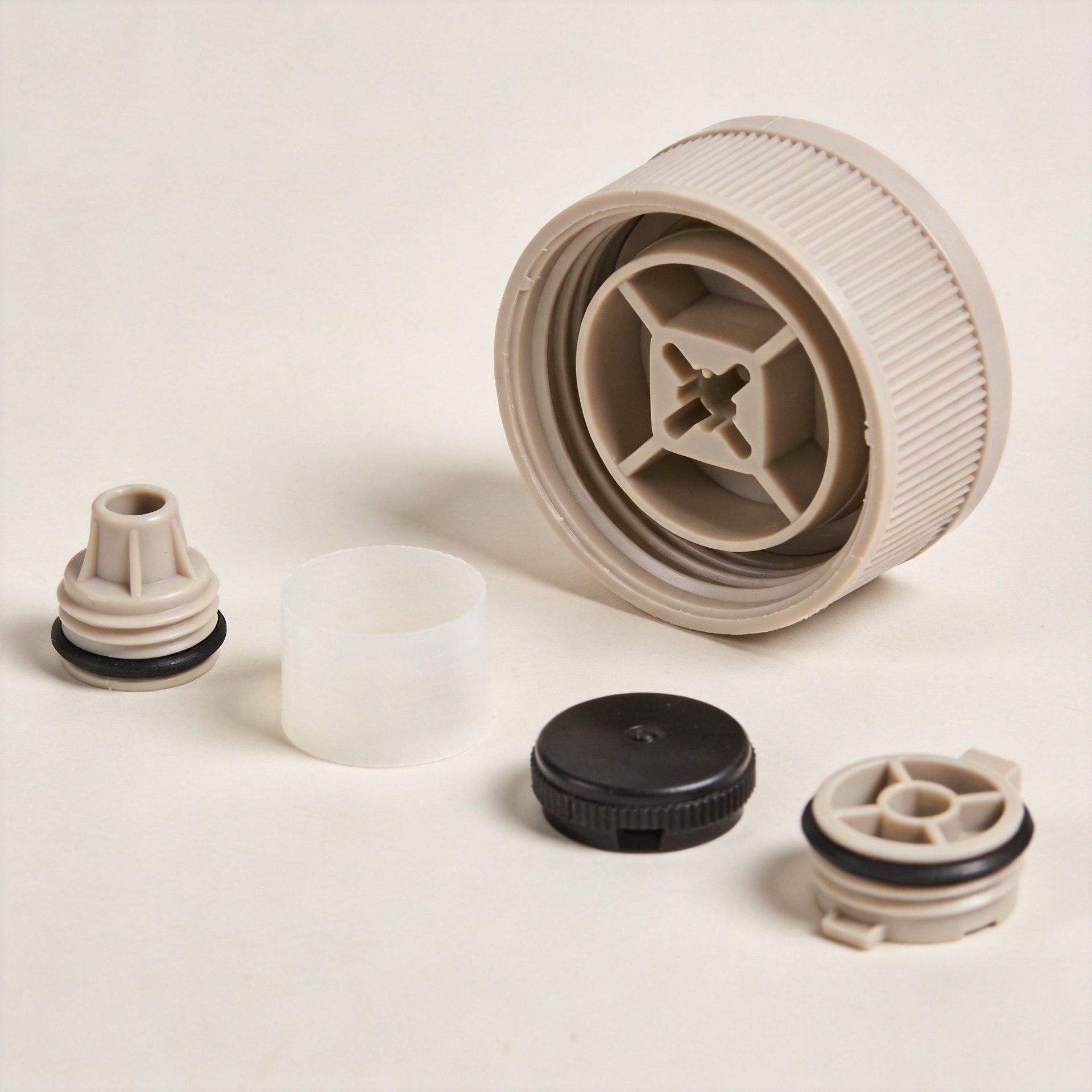
A chemical container cap is one part of a filled package. Review a chemical container cap with the bottle, the closure, and the liquid. Do not start with a broad claim about a vent. Start with the real use case. A chemical container cap may face heat, cold, changes in height, movement, or long storage. Each condition can change the question that the package team needs to answer.
List the facts before you choose a chemical container cap format. Note the container material, the cap material, the fill level, and the headspace. Note how the pack is stored and moved. Say if it stays upright, is stacked, or is opened more than once. Describe the liquid in a useful way. Its makeup, strength, and expected behavior may matter. These facts do not prove that a part will fit. They tell the team what it must check.
The catalog gives four formats for a chemical container cap review. Vent valves are a direct packaging vent category. Vent PE liner is a liner format for a closure discussion. A vent plug is a related plug format. Snap-fit Vent is a related snap-fit format. A chemical container cap may have space for one type of part and not another. Treat the four names as choices to compare, not as parts that can be swapped without review.
For each chemical container cap, ask where the part will sit and how it will be installed. Ask if other parts of the closure affect that location. A small change in the chemical container cap design can change the fit question. The membrane is not the only point to review. The full assembly matters.
Keep chemical container cap selection language clear and limited. Published company information says that MicroVENT works with ePTFE membrane. It also names composite, lamination, and surface-modification techniques. Those facts can guide a material discussion. They do not prove that a given chemical container cap works with a given liquid. The package still needs its own review.
Set the check questions early. Confirm the liquid, the chemical container cap drawing, the container drawing, and the expected use. Confirm the heat range, storage plan, and shipping plan if they matter. Define what the assembled chemical container cap must be checked for. If a test method or standard is relevant, first confirm that it applies to the pack. Do not cite a standard only because its name sounds close to the task.
Write down what is known and what still needs proof. This keeps a general material description from becoming a chemical container cap claim. It also gives the design team a clear path. The path is simple: define the need, compare the format, then verify the final assembly.
A chemical container cap may use a liner, a molded feature, or a dedicated opening. Each chemical container cap route has its own geometry. Show the contact area. Show the opening size. Show the seating point. Show the part of the cap that holds or supports the selected format. Use the latest drawing, not a general picture or a product category name.
Fit work is useful when a membrane part and a closure meet. The team may need to check the area, access for assembly, seating location, and nearby closure features. These are design questions. They are not claims about final package results. Early review can help the team avoid choosing a chemical container cap format based only on a short description.
A good inquiry helps the technical discussion start with facts. Send the chemical container cap drawing and the container drawing. State the material and size. Describe the liquid and the fill condition. Add photos of the closure area when possible. State if you are looking at vent valves, Vent PE liner, vent plug, or Snap-fit Vent.
Also state the storage and shipping conditions that matter to the package. If the chemical container cap will face a known change in heat or height, describe it. MicroVENT can use the information to discuss the catalog formats in the context of the packaging question. The next step is to verify fit with the right product data and validation work for the actual package.

As one of the leading enterprises in industry of ePTFE membranes, MicroVENT® has been engaged in design, production as well as research and development of ePTFE technology since 1995. ePTFE membrane has excellent chemical stability, heat resistance and other properties. MicroVENT® uses composite, laminated, surface modification techniques and confers the ePTFE membrane which has a porous structure for improved strength, heat sealing resistance, Hydrophobic and Oleophobic.
NO.8 QIANCAO ROAD,LIJIA,CHANGZHOU.JIANGSU.CHINA
Copyright © © 2026Pan Asian Microvent Tech (Jiangsu) Corporation.All rights reserved. | Privacy policy
 EN
 AR
 CS
 FR
 DE
 IT
 JA
 KO
 PT
 RU
 ES
 ID
 VI
 TH
 TR
 MS